Friday, October 30, 2026
Wisconsin Institutes for Discovery,
330 N. Orchard St., Madison, Wis.
Free and open to the public
RENEWING OUR COURAGE will gather news media professionals, media innovators, academics, students and the public to take on the urgent ethical issues facing the practice of journalism in increasingly authoritarian times.
With a mix of panel discussions, presentations and hands-on training led by experts from around the world, we will explore topics such as covering protest, unrest, and organized resistance, and covering government corruption and abuse of power. We will also learn about emerging models of journalism that can help us meet the challenges of this moment.

Keynote Conversation
9:00 AM CT:
BEATING LIARS WITH LIES: THE ONION IN THE NEWS ECOSYSTEM
- Ben Collins, CEO of The Onion
Collins will join Director Kathleen Bartzen Culver in a conversation about the role humor and parody play in today’s news ecosystem. Collins will discuss his trajectory from covering mis- and disinformation for legacy news outlets to The Onion, where he leads a team that tries to expose lies and hypocrisy with humor.
He will also detail The Onion’s takeover of the rightwing disinformation machine InfoWars and how mainstream journalism can – and must – resist capitulation and secure a future for fact-based information that serves public interests.

Panel 1
10:00 AM CT:
COVERING PROTEST, UNREST & ORGANIZED RESISTANCE
The second Trump administration has given rise to an increase in protest, unrest and resistance of all kinds. How can journalists learn from the past to improve their coverage of these events and of social movements in general? What are the ethical and practical challenges of covering unrest? Whose political action makes the news and why? And how can journalists ensure their own safety when covering these events?
- Leah Millis, Pulitzer Prize-winning freelance photojournalist
- Doug McLeod, UW–Madison Evjue Centennial Professor of Journalism and Mass Communication
- Moderator: Erin McGroarty, health and policy reporter, The Cap Times

Presentation
11:15 AM CT:
WHAT’S DANGEROUS ABOUT SOLIDARITY?
Resisting rising repression of truthful reporting
- Anita Varma, assistant professor, University of Texas School of Journalism and Media
11:45 AM CT: LUNCH
Panel 2
12:15 PM CT:
COVERING GOVERNMENT CORRUPTION, LIES & ABUSE
How can journalists best serve the public in an age of government disinformation and barriers to accessing vital information? What role can local news play given their economic challenges? And how can national media avoid polarizing frames and focus on solutions?
- Macollvie J. Neel, executive editor, The Haitian Times
- TBA
- Moderator: TBA
1:15 PM CT: BREAKOUT SESSION

Training
2 PM CT:
MEETING THE MOMENT, A GUIDE TO OPEN SOURCE INVESTIGATIONS
- Tomás Dodds, Director of the Public Tech Media Lab, assistant professor, UW–Madison School of Journalism and Mass Communication
Open Source Investigation (OSI) is a research method that connects pieces of digital, open-source information in a transparent and reproducible way to shed light on controversial or disputed topics. As a method, it enables journalists to produce high-impact stories using low-cost, widely accessible digital tools and publicly available data.
In this practical training, participants will learn about the stories you can tell using OSI, and how to produce high-quality digital investigations, including methods for digital verification, chronolocation, and geolocation.
*For a full, hands-on experience, it’s recommended that you bring a laptop to this training.*
3:15 PM CT: CLOSING REMARKS
Panelists and Participants
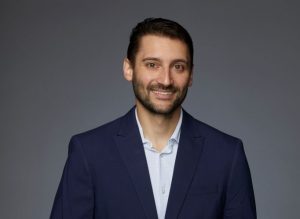 BEN COLLINS is the CEO of The Onion, America’s Finest News Source™. He previously worked as a senior reporter at NBC News, where he won an Emmy and Walter Cronkite Award. He was also a senior editor at The Daily Beast.
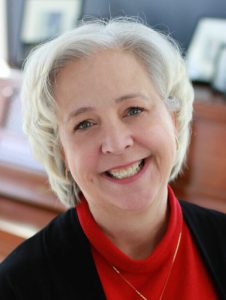 KATHLEEN BARTZEN CULVER is the director of the Center for Journalism Ethics and the James E. Burgess Chair in Journalism Ethics at UW–Madison.
Culver’s research aims to advance integrity in media. Her current work explores First Amendment and free speech and press on campus, particularly in times of protest and conflict. She focuses on the tensions between expression rights and the responsibilities of public communicators. Other recent work examined emerging technologies, such as virtual reality, drones and sensors, and how their use in news affects both ethics and journalism’s relationship with the public.
As an integrated scholar, Culver focuses on how to draw together strands from research, teaching and service to influence other researchers, practitioners, students and the public. She has won multiple awards for her teaching, including the Scripps Foundation Journalism and Mass Communication Educator of the Year and UW-Madison William H. Kiekhofer Distinguished Teaching Award.
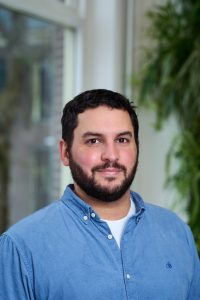
TOMAS DODDS is the Director of the Public Tech Media Lab and an Assistant Professor in Journalism and Mass Communication at the University of Wisconsin-Madison, an Affiliated Faculty at the UW Center for Journalism Ethics, and a Faculty Associate at the Berkman Klein-Center for Internet & Society at Harvard University. He was also a Research Fellow at the AI, Media & Democracy Lab and the Institute for Advanced Study (IAS) at the University of Amsterdam.
Dodds’ research examines the evolving relationship between journalism and technology, with a focus on how journalists and media organizations can develop open-source tools and artificial intelligence systems that serve the public interest.
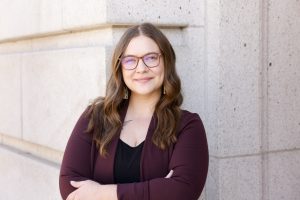 ERIN MCGROARTY is a health journalist currently reporting for the Capital Times in Madison, Wisconsin. Her recent reporting has covered post-Roe abortion policy, challenged prison healthcare practices and shed light on gaps in rural health resources. Formerly, Erin worked as a political journalist in Alaska, producing award-winning coverage of congressional climate change reports and budget cut effects on social services. Erin was a 2025 fellow with the International Women’s Media Foundation, reporting from Kyiv and other regions of central Ukraine on civilian impacts of Russia’s ongoing full-scale invasion.
Erin served as a fellow at the Center for Journalism Ethics in 2021 while pursuing her master’s degree, and published work for the center exploring the ethical complications involved in current crime reporting practices and newsroom examinations of objectivity in the face of social justice movements. Her reporting has been recognized by the Milwaukee Press Club, the Wisconsin Newspaper Association, the National Center on Disability and Journalism and the Alaska Press Club.
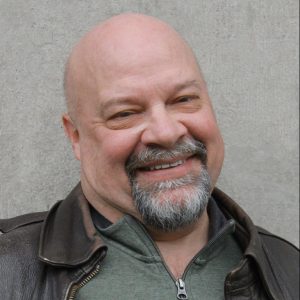 DOUGLAS MCLEOD is an Evjue Centennial Professor of Journalism and Mass Communication at UW–Madison. His research examines the factors that shape the production of messages intended for various mass communication platforms (e.g., news stories, political and health communication messages) and the impact that these messages have on audiences, public opinion and public policy.
For example, one of McLeod’s major contributions has been the study of the content and effects of mainstream print and broadcast news coverage of social protests. This research indicates that such news coverage typically follows a “protest paradigm,” a common set of characteristics including an emphasis on actions over issues, conflicts with law enforcement over challenges to institutional policies, and acts of deviance over active citizenship. Media adherence to the protest paradigm is accentuated when the protest group’s goals call for more radical change and their tactics are more extreme. Moreover, protest groups (including both liberal and conservative groups) that don’t engage in dramatic tactics are often ignored by the media. This puts protest groups in a double-bind situation: either they engage in purely rational discourse that often leaves them largely ignored by mainstream media or they engage in dramatic actions that draw attention of the media, but often lead to news coverage that delegitimizes the protest movement.
McLeod’s research provides insights for groups who are seeking to influence public opinion and public policy. For example, his research informs social movements on how they can make effective and constructive contributions to society. In addition, his research also provides insights that can guide effective health and public information campaigns.
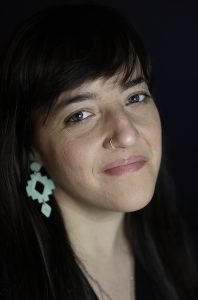 LEAH MILLIS is a freelance photojournalist based out of Washington, D.C. Millis started her career at newspapers and spent 7.5 years working for Reuters covering national news, the White House and international news. Throughout her career she has covered a wide range of issues, including politics, international protest movements, war, immigration, climate change, mass shootings and the rise of domestic extremism in the United States.
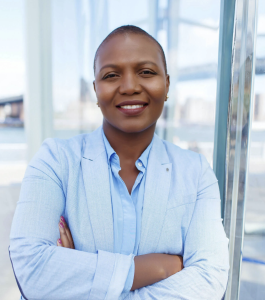 MACOLLVIE J. NEEL currently serves as the Special Projects Editor of The Haitian Times, leading investigations, enterprise packages and explanatory features. She writes occasionally about Haitians in New York and a twice-monthly column opining on communications as a force for good, careers and the workplace, and the immigrant experience from a Haitian American lens. Once an intern at The Haitian Times, Macollvie is proud to have returned in 2020 to guide the outlet through award-winning coverage of the Haitian president’s assassination, rise of criminal organizations (gangs) and presence of diaspora communities beyond the U.S.
Outside the Haitian universe, Macollvie puts her business degrees and communications consulting experience to use helping professionals and brands shape and write their own stories. She recently published “Scripts for Success: Workplace Communication Templates to Advance Your Career,” a professional development book.
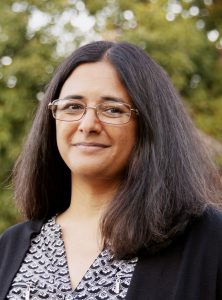 ANITA VARMA is the author of Solidarity in Journalism: How Ethical Reporting Fights for Social Justice (Columbia University Press), which is her first book. After earning her PhD in Communication at Stanford University in 2018, Varma went on to start the Solidarity Journalism Initiative at the Markkula Center for Applied Ethics (Santa Clara University) which she then brought with her to Austin, Texas when she joined the School of Journalism and Media (University of Texas at Austin) as faculty member in 2021.
Varma’s scholarly work has been published in Journalism Studies, Journalism Practice, Journalism, Journal of Communication Inquiry, News Research Journal, Communication, Culture and Critique, and Journalism & Mass Communication Quarterly. She has contributed to edited volumes on journalism, media, and society, and her public-facing work has been published in The Conversation, Nieman Lab, and All About Ethics.
Varma’s award-winning scholarship has gained international recognition among journalists fighting the good fight for social justice and human rights around the world. She received the 2025 Public Engagement award from the Journalism Studies Division of the International Communication Association. Her second book, Dangerous Solidarity: How Truth Telling Persists in Hostile Conditions is in development.
Our Sponsors