By Margaret Shreiner
In an increasingly fragmented media system, journalists are often called on to combat the spread of misinformation and harmful narratives about underserved communities.
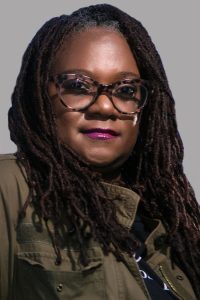
Deborah Douglas, director of the Midwest Solutions Journalism Hub at Northwestern University, says that combating mis- and disinformation on underserved populations requires more than providing facts. She urges journalists to find something substantive for audiences to hold on to by connecting with communities beyond one news story.
Douglas spoke about journalists’ roles in ethically depicting communities, including how journalists can approach their work with a thematic, solutions-based focus.
This conversation has been edited for clarity and concision.
How should we approach reporting on systemic issues and injustices that avoid episodic coverage of communities or people?
This goes for any time you’re doing any reporting for any reason. We need to actually get to know the communities that we serve, which is a challenge at a time when newsrooms are shrinking. Reporters, editors, producers, cameramen, everybody is doing more than their fair share. But it’s incumbent upon us to be in relationship with the communities that we serve.
 As a practical step, as a reporter, for example, I believe in listening, organizing listening sessions, just to get to know community members and to talk to them about their concerns and find out who they are as people, to get some insight into what drives them and to learn the backstory of the community that you’re focusing on. But then don’t do it as a one-off; build a practice of coming back and following up, creating a communication loop where they feel they can call or invite you to something, or send you a note as an update. We need to be genuinely interested in the people in the communities that we cover. We can’t just show up. I always say I don’t want to show up in a community like a vampire, needing a story and just taking a bite of what I need, then leaving.
We really need to be in a relationship with the communities, unlike when I first came into the industry. There was a belief in hard lines, and we need to maintain enough distance from the story so we’re not involved. But also, we’re all humans, and so we need to really understand what motivates us.
We often see episodic reporting on traumatic events like police brutality, rather than a deeper dive into the systemic issues at play. How should journalists navigate this challenge and ensure their coverage adequately addresses the long-standing, systemic context?
It’s so much more than just the surface level of what we see. Because we have so many concrete examples of those kinds of encounters in communities all across the nation, it’s not hard to know that probably we need to step back from the individualized event of the moment and to start looking for patterns, to see if there are some sort of systemic drivers that are creating these sorts of encounters and so many points of injury. Once you do step back, you have more perspective.
It’s easy to tell a story over and over and over again and create a sense of what’s called learned helplessness, like, “Oh, that’s just what happens. What can I do about it? Just let me take care of myself.” But that is not the answer. So it’s incumbent upon us, because we’re in a relationship with the communities we serve, to realize that there are very often people in those communities who want to do something. They’re trying to enact an intervention, find resources to address the issue or appeal to public officials and other institutions to address the problem, and so often in journalism, we miss the opportunity to tell the story of that work. It’s like in the moment, and then we’re off to the other thing. Or we do a huge investigative package that finds more wrongdoing, but not enough time is spent examining who’s doing the work. If something happens in one place, it has probably happened in another. We can always ask, ‘Who’s doing it better?’ and look for positive deviance or outliers. Through reporting, we can discuss what could work based on what we see elsewhere.
How can journalists balance breaking news coverage of underserved communities while trying to take a more solutions-reporting route to engage with systemic issues?
I want to make a point that not every story is a solution story, and solutions journalism is covering responses to pressing social issues. The phrase “solutions journalism” is kind of tricky, because it sounds like you’re promising to elucidate the answer, but it’s really a story about the quest to find the correct answer. Sometimes we can tell the story of a solution that works, but very often we tell stories about interventions or tests, or apply solutions that work only a little. Over time, you create a body of work looking at all of the activity tied to a particular systemic issue and that’s where the aha moment comes in.
As your audience members interact with that information and see the work being done, it creates a different kind of psychological response. You’re basically showing people in communities acting as agents of their own salvation by working to address the issues.
To the point of when do you engage in breaking news versus solutions journalism? We know where the issues are. We know the systemic impacts of certain things. So we have to do the breaking news story, but we should be ready to pivot and start asking more profound questions about the pattern that may emerge. If you see patterns in the moment, you can start asking those questions and getting expert and community comments. Community members are experts in their lived experience of those patterns. In Chicago, we had Operation Midway Blitz, a federal immigration enforcement surge that began in September. Soldiers showed up, creating an element of fear. Still, the presence of a federal policing force, especially in marginalized communities, immediately raised a question about systemic effects tied to policing and the community’s relationship to police. Even in the moment, you have an opportunity to look at issues of racial profiling and everything that ties into that.
What can journalists do to really combat misinformation and disinformation circulating right now that is harming people, especially underserved communities?
There are a lot of bad actors using misinformation to keep us confused. The whole idea of democracy and what this is supposed to be is being challenged every day. But I think that as journalists, us engaging in a really transparent reporting framework, that shows how things work, that slows the storytelling down enough to help people understand what the work actually looks like, where we presume that our audience members are intelligent and really want to know how the world works, and that we’re not just churning out the kind of information that gets an immediate reaction that dissipates quickly and then eventually turns them off.
If we give them something substantive to hang on to, something that shows what forward movement could look like, research shows that people want to engage with that at a greater level. People who engage with information in that way report higher self-efficacy. They spend more time reading stories. They’re more likely to click links, sign up for newsletters and show up for community engagement events. The news media is more than just this two-dimensional experience of looking at a screen, whether it’s a flickering video frame or reading a report, it really is about a relationship. It’s about breaking that fourth wall and getting out of the screen, out of the newsrooms, into the community to create news as an experience.
Oftentimes, journalists hear that they should remain ‘objective.’ Can journalists find a balance between reporting objectively and reporting the truth about systemic injustices?
The way objectivity has been practiced in this country for decades is really a reflection of white cis-male concerns, and any other experience or concern that doesn’t support the white cis-male priority in this country is deemed not objective. It has to do with news judgment and how we decide what to prioritize and how to cover communities.
So what that looks like to me in a newsroom setting is that journalists think they need to be naturally objective, so we do not take stock of the different things that make up our identities, which we call fault lines. Our racial and ethnic backgrounds, our class backgrounds, our gender and sexuality expressions, our citizenship status, if you never allow yourself to actually grapple with that and consider how that informs your decision making process about how you cover communities, how you frame questions, how you prioritize the coverage of a beat over time, then you’re doing a disservice to yourself in the community that you serve.
I’ve been in newsrooms where, if we’re following this sort of white, cis male prioritization process that we’ve all been implicated in, it doesn’t leave room for you ever to say, ‘Well, I have this background, or I have that background, and this is why I think this way.’ I suppressed that for so many years in the newsroom, when actually taking stock of those identifying factors could help lead to better answers or force me to get outside my frame of reference and better understand people who have a different experience than I do. So objectivity is a journey. We’re not at the destination where we’re these pure people who can show up and be objective all the time.
The final thing is that, ethically, the news business is not honest or transparent about its shortcomings. And what I mean about shortcomings, I mean the fact that we’re grappling with how to find a workable economic model for sustainability, and that we’re vastly under-resourced with professionals, that we don’t have enough journalists actually to do the work. The local news initiative at Medill, of which I’m a part, has research showing that we’re under-resourced for the number of journalists who actually need to be fanned out across the country to narrate the story of what it is to live here in America.
So what happens is that when you’re having a news meeting, you only have so much time and so many people to do the work, so you end up covering stories from a framework of personal responsibility. Why did that person make that decision to create this negative outcome, and why did they keep doing it over and over again? It’s always pinned to an individual or a community. We look at what’s wrong with them rather than at the systemic reasons why people are put in a position to make those decisions or create those outcomes. Over-reliance on personal responsibility and insufficient focus on systems are problems journalism faces right now.
Margaret Shreiner was a 2025 fellow at the Center for Journalism Ethics and is a recent graduate of the School of Journalism and Mass Communication at the University of Wisconsin–Madison.
The Center for Journalism Ethics encourages the highest standards in journalism ethics worldwide. We foster vigorous debate about ethical practices in journalism and provide a resource for producers, consumers and students of journalism.