By Audrey Lopez-Stane
In 2021, Nora Hertel closely covered a racist crime in greater Minnesota as a reporter in a traditional newsroom.
She covered city meetings, spoke with the family affected and honed in on the crime side of the story because she said it was “important to address an overtly racist incident.”
After her stories were published, Hertel interviewed another source on a different topic who shared that the coverage of the incident had been “too much.”
Her source did not know she was the reporter who had covered the hate crime but the comment sparked a realization. 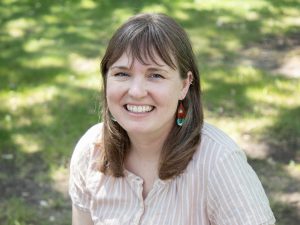
“It was interesting to hear the feedback from someone who agreed that it was important to cover but felt that it was overkill,” Hertel said. Hearing that her coverage may have focused too much on the negative details of the situation helped shape a different kind of news outlet she was creating for greater Minnesota.
Later that year, Hertel founded Project Optimist, a solutions journalism outlet based in greater Minnesota.
Solutions journalism, which focuses on in-depth reporting of how people are trying to solve problems in their community, has four pillars: Response, insight, evidence and limitations. When journalists strive to include all four pillars in their journalism, they can not only explain a problem and show what is being done to address it, but also shed light on the challenges and limitations of proposed solutions.
For Hertel, solutions journalism is a new tool that more newsrooms should use.
“I just think it’s so much more effective to be telling stories about how people… are solving problems,” Hertel said. “Instead of just like, ‘this bad thing happened, here’s how mad everyone is about it and here’s what’s wrong with the community.’”
This conversation has been edited for clarity and concision.
What inspired you to found Project Optimist?
The most honest answer is that I was burned out, but I didn’t want to leave the field of journalism.
I had been working for Gannett newspapers for 7 years. I worked for Wausau Daily Herald in Wisconsin and then St. Cloud Times, and Gannett was in the middle of the cuts and the adaptation to all the challenges in the field. I was really burned out having seen colleagues laid off, take buyouts or leave journalism entirely because they also were burnt out. So I was really looking to solutions journalism as an antidote for that, and even when I was doing it in a traditional newsroom, I felt like I didn’t have enough time to do enough solutions journalism to balance me out.
So I started developing my own newsroom.
I started with a lot of conversations with friends and people in the field. And I initially thought I’d just create something to serve greater Minnesota. When I talked to people who lived there in my early research, I realized that people were also very burned out on the news, consumers were. The themes in my research were that people were depressed by the news, angry or frustrated.
So solutions journalism became our unique value proposition, that’s the phrase we use in the entrepreneur world. That’s kind of what set us apart from existing publications is our focus on solutions journalism. But it really was in response to my burnout and consumer burnout with traditional news.
When you started Project Optimist, was there a vast difference between a solutions journalism newsroom and a traditional newsroom?
It does require a paradigm shift to really commit to solutions journalism. You’re looking for what works, what went right instead of what went wrong. And it’s just really a different way of thinking.
With traditional newsrooms, there’s still that need of like, ‘someone gave us this tip about something wrong.’ Or, ‘Here’s the status of a problem, we need to explain it to people.’
And we do explanatory journalism too, because I think you cannot just do solutions journalism, you also have to put the framing and the focus on, ‘how are people responding to this?’ It’s just not how we’re trained or conditioned in the field or we haven’t been. That’s the biggest difference,
How has Project Optimist affected the Greater Minnesota community?
I know that we have had an impact on other journalists. I know that other newsrooms watch us, and we have a lot of collaborators and partners. I think that seeing our development is encouraging to other journalists who also have that burned out feeling.
I know the concept of solutions journalism is easy and welcome among consumers as well. I continue to hear from people that they’re burned out on the way stories and news are traditionally presented.
Some people see us as a niche product, so I’m trying to overcome that. We’re not just feel-good stories. We’re looking at actual problems, but the framing feels better.
What is the hardest part about championing solutions journalism, and how do you overcome those challenges?
The biggest challenges are not the solutions journalism challenges. They’re just the challenges that face journalism across the board. Being sustainable, having funding, making the case for people to donate or subscribe and pay for news because not a lot of people want to. In Minnesota, 14% or something of people are willing to pay for some kind of news. That’s the biggest hurdle.
Solutions journalism-wise, the old guard of journalism doesn’t necessarily see the value of solutions journalism in the way that my generation does or the up-and-coming generation of reporters. I think it’s so important for the future of the field, I don’t think we’ll keep our audience without it.
What are the important aspects of solutions journalism people might not know?
When we get feedback from readers, they’ll say that they really like that we’re positive or that we have good news. I like to remind people that the stories can be hopeful, but they are like hope with teeth or pragmatic hope. We don’t endorse a response to a problem, we just say this is how people are responding and here’s the evidence, the insight and limitations, those are the pillars of solutions journalism that you focus on the response and you include evidence, insight, and limitation around that response.Yes, it probably does feel good, but it also is good reporting and good journalism.
You have many columns about your life on Project Optimist. Journalists can be so used to telling other people’s stories, what does it mean to be able to tell your stories through solutions journalism?
Some of my favorite books and articles are like that, where the journalist is a character in the story as well. They are talking about why the story matters to them and kind of that mixing of personal narrative with reporting. That’s always a kind of journalism that I have liked to read. When it’s an issue that I have experienced in my own life, I feel like this is an opportunity for me to be the vulnerable person at the heart of the story.
There’s a story where I interviewed, like 10 or 15 people from my husband’s family, and USA Today published the story, and it was about Huntington’s disease. I had my story in there, I had my extended family’s story in there, and it was so meaningful to people. I got so many emails from across the country of people impacted by that disease. It’s also a chance for me to model to other sources that it’s important to have that personal story within our reporting, within journalism. Having a story that’s just data doesn’t land in the same way as a story with a vulnerable human experience.
How has solutions journalism progressed, and what strides are Project Optimist making now?
If you look at the Solutions Journalism Network, they have done an amazing job spreading all over the world. When I go on a call with other trainers in solutions journalism, there’s people from all over the world. That’s really exciting to me to think about, I’m a part of this movement that’s global. Locally, I know within Minnesota there’s a lot of movement on solutions journalism. The Minnesota chapter of Society of Professional Journalists added a solutions journalism category to their Page One Awards this year. So I consider that a big step.
I’m really excited about it. But then there’s a long way to go too. When I turn on the news or read it, there’s not enough. I do see solution stories in all kinds of publications now, which is awesome. But we can do more.
What is the best part of founding a solutions journalism outlet?
The best part is the solutions journalism. We downsized last year, and that caused some soul searching about what can we cut or what is not landing with our audience. For example, one of the things that I’m changing is publishing shorter stories. But it also brought a renewed commitment to solutions journalism as the thing that makes us different, as the thing that our readers are really hungry for.
I’ve really tried to go back to what our audience wants and needs from us, which is that hopeful feeling that comes with solution stories, that pragmatic hope. I’m really doubling down on solutions journalism and also explaining to people within the story with the sidebar, ‘this is a solutions story, and these are the four pillars in the story that make it a solutions journalism story.’ I love that.
I feel really proud to be recommitted to solutions journalism and knowing that people appreciate it, people in the field, but also our audience really appreciates that kind of storytelling. We train it as well. So, knowing that we’re increasing the amount of solutions journalism beyond our publication as well makes me feel really proud.
Audrey Lopez-Stane is a 2026-27 fellow at the Center for Journalism Ethics and a sophomore in the School of Journalism and Mass Communication at the University of Wisconsin–Madison.
The Center for Journalism Ethics encourages the highest standards in journalism ethics worldwide. We foster vigorous debate about ethical practices in journalism and provide a resource for producers, consumers and students of journalism.