By Ella Hanley
For many health reporters in the United States, the job once felt more straightforward. Objectivity often meant relaying guidance from federal agencies that were broadly viewed as scientifically credible and politically neutral.
“The [Centers for Disease Control] used to be looked upon with admiration and dependence around the world,” says Gary Schwitzer, a former professor of health journalism and media ethics at the University of Minnesota.
But years of conflicting messaging and consistent reshuffling of leadership have eroded public confidence, he said. A February poll by the Annenberg Public Policy Center found that Americans now trust major professional health associations more than federal health agencies.
As trust erodes, health journalists and experts argue that good reporting no longer means relaying government recommendations. Instead, it requires rigorous evaluation of evidence and avoiding the false balance that comes from treating all claims as equally credible.
Schwitzer referenced the growing popularity of raw milk in the United States, despite longstanding evidence linking it to serious health risks. Those consumers aren’t operating in a vacuum, he said. They’re responding to misguided claims from influential political figures.
“It’s incumbent on journalists not to simply act as stenographers…not to take what comes down from the podium without challenging things that are known to be wrong,” he added.
‘Do no harm’
Schwitzer, who spent 14 years as a television medical reporter and later led CNN’s medical unit, recalled newsroom debates over covering cigarette hazards.
Editors often insisted on including comments from tobacco lobbying groups, a form of false balance.
“We’ve got to get beyond that,” he said. “If what you’re trying to do is to serve the audience… then you have no obligation to tell this other side that is full of BS.”
Tara Haelle, the infectious diseases beat leader for the Association of Health Care Journalists, said false balance “doesn’t work” with science journalism.
“Facts are facts,” she said. “Just because there’s people who, for political reasons, don’t believe those facts, it doesn’t mean they’re no longer facts … You’re not serving your audience well if you’re not making the evidence your number one priority.”
Haelle, whose work has appeared in publications including National Geographic and Scientific American, believes the medical principle of “do no harm” applies to journalism, too.
Because health reporting can directly shape public behavior, she argues journalists have an ethical responsibility to consider the consequences of what they publish. Amplifying inaccurate or misleading claims from partisan sources can cause real harm.
“Not only are you inaccurately representing reality, you’re also putting the health of the people who read your article in danger,” she said.
But rejecting false balance does not eliminate ambiguity, especially in nutrition reporting.
Navigating nuance
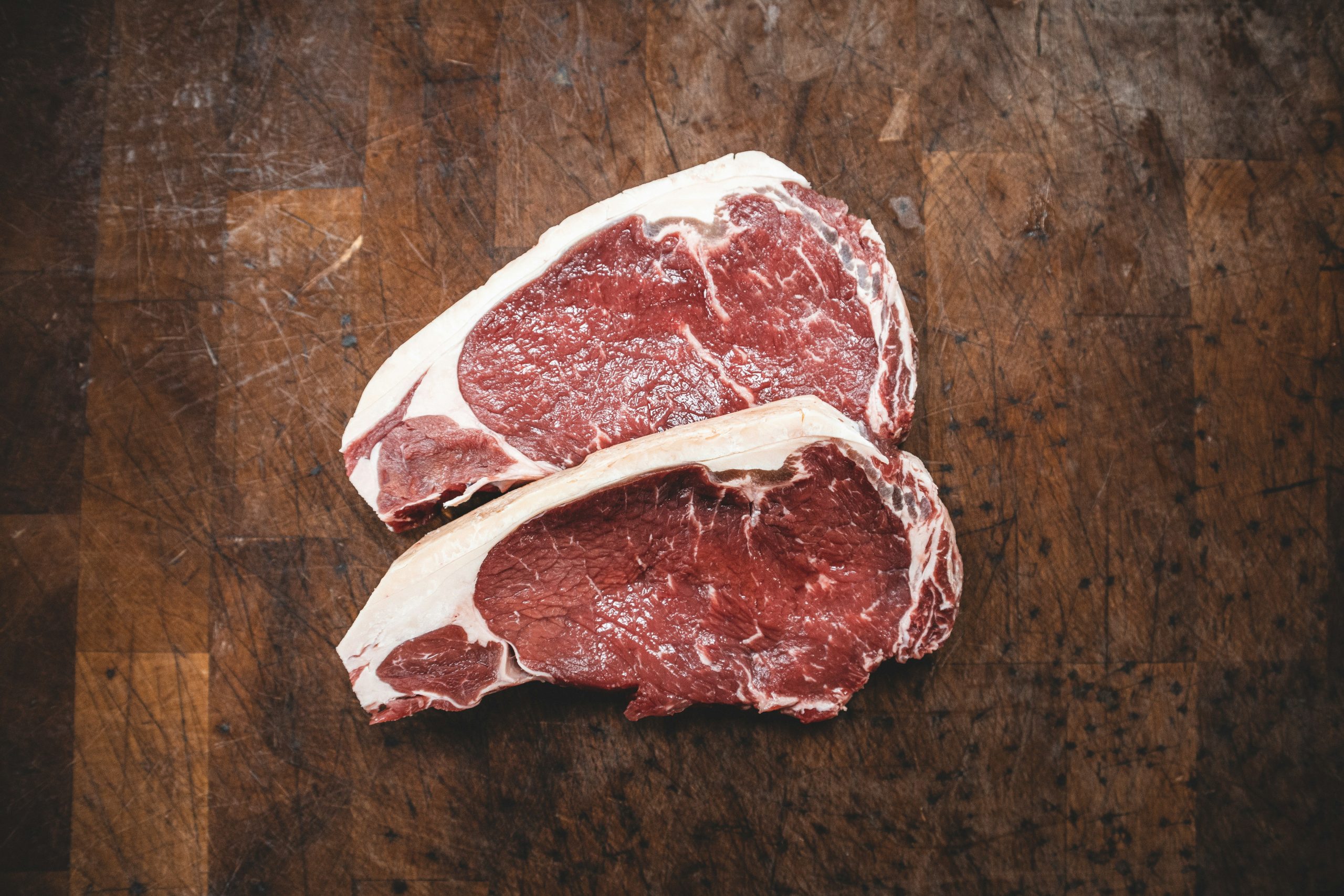
When Secretary of Health and Human Services Robert F. Kennedy Jr. introduced the “New Food Pyramid” earlier this year, some recommendations, such as reducing processed food consumption, aligned with established research. Others, including increased red meat consumption, drew criticism from experts.
Alice Callahan, a nutrition reporter at The New York Times, said part of her job now involves fact-checking federal officials, something she never anticipated when she entered nutrition reporting.
Interpreting the pyramid required understanding how officials arrived at the recommendations, she said, and comparing the final guidance against historical dietary advice.
Callahan said that in nutrition reporting, where findings often evolve and rarely produce absolute conclusions, communicating uncertainty and context is essential.
“Often we see a study come out and think it’s going to make a grabby headline somewhere, but it’s not a very good study,” she said. “Frankly, I don’t think it’s responsible to write a headline about it.”
However, when misleading claims begin attracting widespread attention, she said coverage becomes necessary to address public confusion and uncertainty.
“Our federal health officials are accountable for the words they use,” Callahan said. “If they’re sharing information that is inaccurate and potentially harmful, whether that’s related to vaccines or Tylenol and autism or diet, I think it’s our responsibility to cover those.”
Callahan consults a wide range of expert sources, seeking both subject-area researchers and outside perspectives to identify where scientific consensus exists.
“I think it’s important to convey to readers where there’s controversy or different opinions on something, and why there are still open questions,” she said. “If someone hasn’t been convinced by the science that exists yet, that’s worth noting.”
That balancing act has become increasingly difficult for journalists, as science and health have become deeply partisan issues.
Schwitzer founded HealthNewsReview.org, a now retired project that evaluated the accuracy and balance of medical coverage in major U.S. news outlets. Now writing independently on Substack, he said his critiques of federal health claims sometimes cost him subscribers.
“I just wave goodbye to them,” he said. “You can’t go in expecting to sway everyone, because it’s not going to happen.”
Schwitzer said accusations of political bias are now unavoidable across journalism. But concern over appearing partisan, he argued, cannot outweigh factual accuracy.
“That’s not your worry,” he said. “Your worry is, did you get it right?”
Ella Hanley was a 2025-26 fellow at the Center for Journalism Ethics and is a recent graduate of the School of Journalism and Mass Communication at the University of Wisconsin–Madison.
The Center for Journalism Ethics encourages the highest standards in journalism ethics worldwide. We foster vigorous debate about ethical practices in journalism and provide a resource for producers, consumers and students of journalism.